As summer vacation season approaches, the term “Hantaan virus” has been circulating uneasily among those planning cruise trips. Search volume surged after a hantavirus outbreak on the Dutch cruise ship MV Hondius in April–May 2026 killed three people. Yet accurate information is scarce, and only exaggerated news stories seem to be making the rounds. What you’ll learn from this article: ✅ The real difference between Hantaan virus and Andes virus ✅ The exact timeline of the Hondius incident and current fatality count ✅ Prevention tips to reduce exposure risk during cruises, camping, and hiking ✅ How to report suspected symptoms after returning home ✅ A clear standard for domestic risk levels — so you won’t be swayed by sensationalized reporting
What Is Hantaan Virus? How Does It Differ from Andes Virus?
 First, let’s clarify the terminology. The Hantaan virus was first isolated and named in 1976 by the late Dr. Ho Wang Lee from striped field mice along Korea’s Hantan River, and it serves as the representative species of the Orthohantavirus genus.
By contrast, the recent cruise ship outbreak was caused by Andes virus, which belongs to the same genus but is found mainly in the Patagonia region of South America. The two viruses are “cousins,” but their clinical presentations differ.
First, let’s clarify the terminology. The Hantaan virus was first isolated and named in 1976 by the late Dr. Ho Wang Lee from striped field mice along Korea’s Hantan River, and it serves as the representative species of the Orthohantavirus genus.
By contrast, the recent cruise ship outbreak was caused by Andes virus, which belongs to the same genus but is found mainly in the Patagonia region of South America. The two viruses are “cousins,” but their clinical presentations differ.
| Category | Hantaan Virus | Andes Virus |
|---|---|---|
| Main Distribution | Korea, China, Russian Far East | Argentina, Chile |
| Primary Symptoms | Hemorrhagic Fever with Renal Syndrome (HFRS) | Hantavirus Pulmonary Syndrome (HPS) |
| Fatality Rate | Reported at about 5–15% | 20–35% |
| Human-to-Human Transmission | None reported | Suspected in some cases |
| Most people typing “Hantaan virus cruise” into the search bar are actually looking for information about the Andes virus outbreak — worth keeping in mind. |
💡 Key Point: Hantaan virus is native to Korea, while the cruise outbreak was caused by South America’s Andes virus — same genus, different species.
The Hondius Outbreak: What Actually Happened
In the spring of 2026, the Dutch expedition cruise ship MV Hondius, sailing through the South Atlantic and Antarctic region, saw a string of passengers and crew complaining of fever and respiratory distress. Tests came back positive for Andes virus. The reported figures are as follows:
- Confirmed cases: 7
- Suspected cases: 8
- Deaths: 3
- Port of call: Cape Verde (where quarantine disembarkation took place)
- Suspected site of initial exposure: A mountain lodge facility in the Patagonia region of South America This incident drew particular attention because the WHO mentioned the “possibility of human-to-human transmission in some cases.” Existing hantaviruses were thought to spread only through rodent droppings, urine, or saliva — so if human-to-human transmission turns out to be real, it would shake the entire disease control paradigm.
💡 Key Point: The Hondius incident matters not just as an outbreak but as the first case where human-to-human transmission was suspected.
Cruises, Camping, Hiking — Summer Trips with High Exposure Risk
 Surprisingly, hantavirus exposure often happens during “ordinary vacations.” The key mechanism is inhaling dust particles from rodent droppings that have accumulated in enclosed spaces.
Here are the types of summer travel that carry the highest risk:
Surprisingly, hantavirus exposure often happens during “ordinary vacations.” The key mechanism is inhaling dust particles from rodent droppings that have accumulated in enclosed spaces.
Here are the types of summer travel that carry the highest risk:
- South American and Antarctic cruises: Risk of exposure when visiting mountain lodges or storage facilities at ports of call
- High-altitude trekking (Patagonia, the Andes): Staying in unstaffed mountain shelters (refugios)
- Domestic and overseas camping or car camping: Tents and storage facilities left closed for long periods without ventilation
- Farm sheds and rural cottages: Inhaling dust when opening them for the first time between spring and summer
- Backpacking trips: Camping near rodent habitats In particular, there are many reported cases where exposure occurred during “just a 30-minute stop at a mountain lodge.” Short exposure time is no guarantee of safety. I personally remember camping next to an abandoned house in the mountains of Gangwon Province last year. The next day I came down with a headache and mild fever, and worried about it for several days. It turned out to be just a common cold, but that was the first time I seriously googled the phrase “rodent dropping dust.”
💡 Key Point: Hantavirus exposure doesn’t happen on “wilderness expeditions” — it happens in “enclosed spaces you just briefly stopped by.”
Symptom Checklist and 5 Prevention Tips
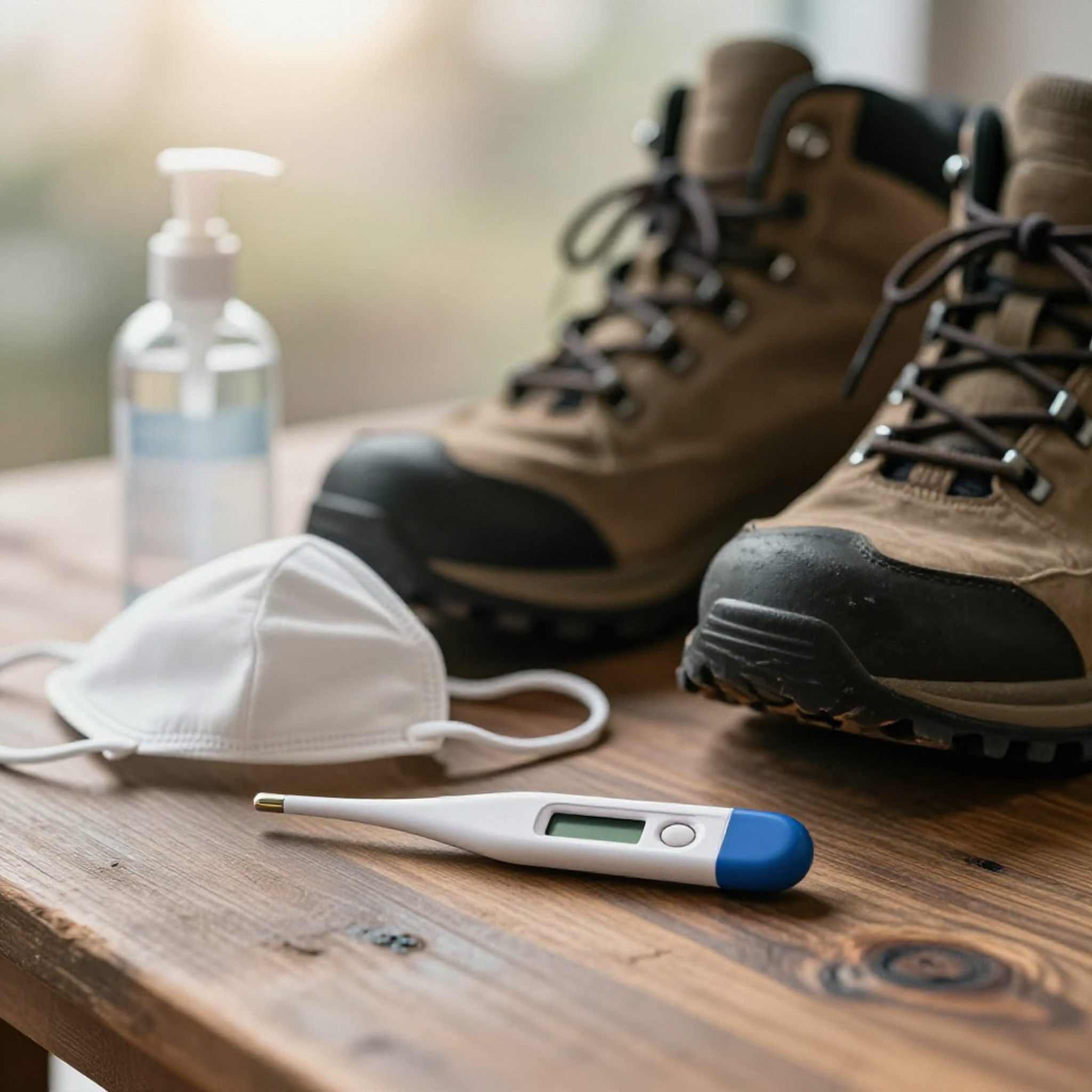 The incubation period for Andes virus is typically known to be 2–4 weeks. Since symptoms often appear well after returning home, it’s essential to inform your doctor of your travel history.
3-Stage Symptom Checklist
The incubation period for Andes virus is typically known to be 2–4 weeks. Since symptoms often appear well after returning home, it’s essential to inform your doctor of your travel history.
3-Stage Symptom Checklist
- Stage 1 (Early): Fever above 38°C, muscle aches, headache, abdominal pain
- Stage 2 (Middle): Dry cough, shortness of breath, chest tightness
- Stage 3 (Late): Acute respiratory distress, low blood pressure, pulmonary edema — head straight to the ER Here are 5 practical prevention tips to help you avoid getting there:
- Avoid rodent droppings and enclosed spaces: Thoroughly ventilate mountain lodges, storage rooms, and ship emergency compartments before entering
- Practice strict personal hygiene: Wash your hands, and wear a KF94 or higher mask in environments where dust may be generated
- Seal cooking gear and food supplies: Store food outdoors so rodents can’t access it
- Wash clothing separately if exposure is suspected: Hot-water washing is recommended
- Monitor yourself for about 4 weeks after returning home: If you develop a fever or respiratory distress, immediately call the Korea Disease Control and Prevention Agency at 1339 or visit a medical facility and notify them of your “South American or Antarctic travel history”
💡 Key Point: The long incubation period makes it easy to let your guard down, thinking “it’s been a while since the trip” — but monitoring for about 4 weeks is essential.
How to Avoid Being Swayed by Domestic Risk and Sensationalized Reporting
 I’m saving the most important message for last. According to the Korea Disease Control and Prevention Agency’s announcement on May 8, 2026, the domestic risk level is “Low.”
The reasoning is clear:
I’m saving the most important message for last. According to the Korea Disease Control and Prevention Agency’s announcement on May 8, 2026, the domestic risk level is “Low.”
The reasoning is clear:
- The rodent considered the main vector of Andes virus (the long-tailed pygmy rice rat, Oligoryzomys longicaudatus) does not live in Korea
- There have been zero cases of importation into Korea
- The hemorrhagic fever with renal syndrome cases that do occur domestically are caused by the existing Hantaan and Seoul viruses (with several hundred cases reported each year) So the sensationalized reports suggesting “Hantaan virus is spreading in Korea” are not factually accurate. That said, if you’re planning a South American or Antarctic cruise, or preparing for a Patagonia trek, it’s worth familiarizing yourself with the prevention tips. Summer travel is exciting for everyone. But “feeling excited” and “being prepared” are not the same thing. Add the 5 prevention tips covered in this article to your pre-departure checklist. And for about 4 weeks after returning, if you experience any unusual fever, don’t hesitate — call 1339. A single phone call can save the golden window.
💡 Key Point: Domestic risk is low — but for travelers to South America or Antarctica, a pre-departure checklist and about 4 weeks of post-trip monitoring are essential.
출처
https://www.kdca.go.kr/bbs/kdca/42/311008/artclView.do?layout=unknown https://imnews.imbc.com/replay/2026/nwtoday/article/6821686_37012.html https://www.koreadaily.com/article/20260510005733980 https://v.daum.net/v/20260510010006740 https://www.youtube.com/watch?v=j3tAS9guOFQ https://namu.wiki/w/%ED%98%BC%EB%94%94%EC%9A%B0%EC%8A%A4%ED%98%B8%20%ED%95%9C%ED%83%80%EB%B0%94%EC%9D%B4%EB%9F%AC%EC%8A%A4%20%EC%A7%91%EB%8B%A8%20%EA%B0%90%EC%97%BC%20%EC%82%AC%EA%B1%B4
댓글