
“The race flipped in just two weeks.” That’s the line people keep repeating ahead of the Seoul mayoral race in the June 3 local elections. As recently as early May, one side held a clear lead — but that gap has since narrowed into a dead heat within the margin of error, and now no one can say with confidence who will win. For anyone left more confused than informed by the daily flood of polling headlines, we’ve pulled all the scattered pieces together in one place. What you’ll learn from this post: ✅ How the polling trends have shifted from early May until now ✅ A side-by-side comparison of the two candidates’ profiles and signature pledges — Jung Won-oh and Oh Se-hoon ✅ Where the real battleground lies as voter sentiment splits by generation and region ✅ The last-minute variables that could swing the result over the remaining 12 days
1. The Race That Flipped in Two Weeks — Start With the Polling Trend
The single keyword for this election is, without question, “dead heat.” That’s because the mood in early May and mid-May couldn’t be more different. Here’s how the polling flow breaks down by point in time:
| Timing | Reported Race Trend | Mood |
|---|---|---|
| Early May | One candidate leads by roughly 10%p | Lead consolidating? |
| Mid-May | Narrowed to a tossup within the margin of error | Entering dead-heat territory |
| Now (D-12) | Results diverge by polling firm | Too close to call |
| The key point is that results differ from one polling firm to another. Even polls released in the same week can show Candidate A ahead in one and Candidate B ahead in another. So rather than getting swept up in every single number, you need to watch the trend. |
💡 Key Tip: When reading a poll, always check the polling firm, survey dates, and sampling error together. You can verify the exact figures yourself on the website of the National Election Survey Deliberation Commission. 💡 Key Point: Through May, a clear lead narrowed into a tossup within the margin of error, making the outcome virtually impossible to predict.
2. Jung Won-oh vs. Oh Se-hoon — The Two Candidates’ Profiles at a Glance
The two candidates’ résumés lay out the matchup perfectly. One is a veteran chasing a fourth term in office, the other a fresh face who came up as a district mayor. Here’s a comparison of their core profiles:
- Oh Se-hoon: The incumbent Seoul mayor. A win this time would put him on track for an unprecedented record — a fifth term as Seoul mayor. He’s running on “stability and continuity.”
- Jung Won-oh: Former mayor of Seongdong District. As the only district mayor in the metropolitan area to serve three consecutive terms, he highlights his administrative track record. His pitch rests on “a new face and generational change.” Jung Won-oh, in particular, points to the transformation of Seongsu-dong as his signature achievement. His strategy frames the journey of a run-down factory district turning into one of the city’s hottest spots as “scaling the Seongdong model up to all of Seoul.” Oh Se-hoon counters with citywide infrastructure accomplishments such as the Han River Renaissance. As a result, the contest is naturally hardening into a head-to-head over the candidates themselves: “the five-term legend vs. the first mayor to rise from a district office.”
💡 Key Point: The contrast between “Oh Se-hoon, experience and stability” and “Jung Won-oh, results and a fresh face” forms the basic frame of this election.
3. Signature Pledges Collide Head-On: “Commute” vs. “Housing”
What voters feel most directly, in the end, are everyday-life pledges. And the two candidates’ signature promises point in distinctly different directions. Here’s a rundown of their flagship pledges:
| Category | Jung Won-oh | Oh Se-hoon |
|---|---|---|
| Signature pledge | A 30-minute commuter city | Supply of 310,000 homes |
| Youth & newlywed housing | Equity-accumulation homeownership | SH co-investment model |
| Core frame | Quality-of-life and safety focused | Development and supply focused |
| Jung Won-oh’s “30-minute commuter city” is a vision to ensure that, wherever you live, you can reach work within 30 minutes — putting the weight on transit and everyday infrastructure. Oh Se-hoon’s “supply of 310,000 homes,” by contrast, is a head-on approach: rein in housing prices by expanding supply. | ||
| Their housing pledges for young people and newlyweds clash, too. Both share the goal of “easing the burden of buying a home,” but their methods differ — Jung Won-oh favors an equity-accumulation model that lets buyers build up assets bit by bit, while Oh Se-hoon backs a co-investment model in which the public sector invests alongside buyers. |
💡 Key Point: The difference in priorities — “transit and daily life” (Jung Won-oh) versus “housing and supply” (Oh Se-hoon) — defines each candidate’s policy identity.
4. Voter Sentiment by Generation and Region — Here’s the Real Battleground
This election is likely to be decided by the generational divide, because the candidates’ support bases split sharply by age group. Here’s how the reported voter map breaks down:
- Jung Won-oh’s strength: Voters in their 40s and 50s — the core “everyday-life” generation grappling firsthand with their children’s education and housing costs
- Oh Se-hoon’s strength: Voters in their 20s and 30s, and those 70 and older — a relative edge at both ends of the age spectrum
- The battleground: The last-minute choice of moderate and unaffiliated voters, where neither side dominates What’s intriguing is the sentiment among voters in their 20s and 30s. Contrary to past conventional wisdom, Oh Se-hoon is showing strength among younger voters — a trend read as a response to bread-and-butter issues like housing and jobs. On top of that, the presence of third-party candidates such as the Reform Party is another variable. Depending on which side’s base those votes eat into more, the gap between first and second place could swing.
💡 Key Point: In a generational divide split between the 40s–50s (Jung Won-oh) and the 20s–30s plus older voters (Oh Se-hoon), the moderate bloc and third-party votes will decide the final direction.
5. The Remaining 12 Days — Last-Minute Variables That Could Swing the Result
Elections tend to swing in the final week. Here are the variables worth watching all the way to the finish at the D-12 mark. These are the last-minute points to keep an eye on:
- Macro real-estate variables: How a situation where sale, jeonse, and monthly-rent prices are all rising at once plays into the “referendum on the incumbent vs. case for stability” frame
- Negative warfare: The fallout from late-stage exposés on development and safety issues, GTX-related allegations, candidate vetting, and more
- TV debate scorecards: A knockout blow — or a slip-up — in the final debates such as the Kwanhun Club’s
- Turnout: Since whichever side mobilizes its generations more tends to benefit, the final turnout could decide the result Real estate, in particular, is a double-edged sword. Price instability could fuel a referendum mood against the incumbent — or, conversely, could strengthen the case for stability under the banner of “steady management.”
💡 Caution: Once the blackout period for publishing polls kicks in (six days before election day), official figures dry up. From that point on, be careful not to be swayed by “blind-spot information” from unknown sources. 💡 Key Point: Real estate, debates, turnout, and negative campaigning — these four variables look set to be the final counterweights in a dead-heat race.
Wrapping Up: An Election Where a Single Vote Carries the Most Weight
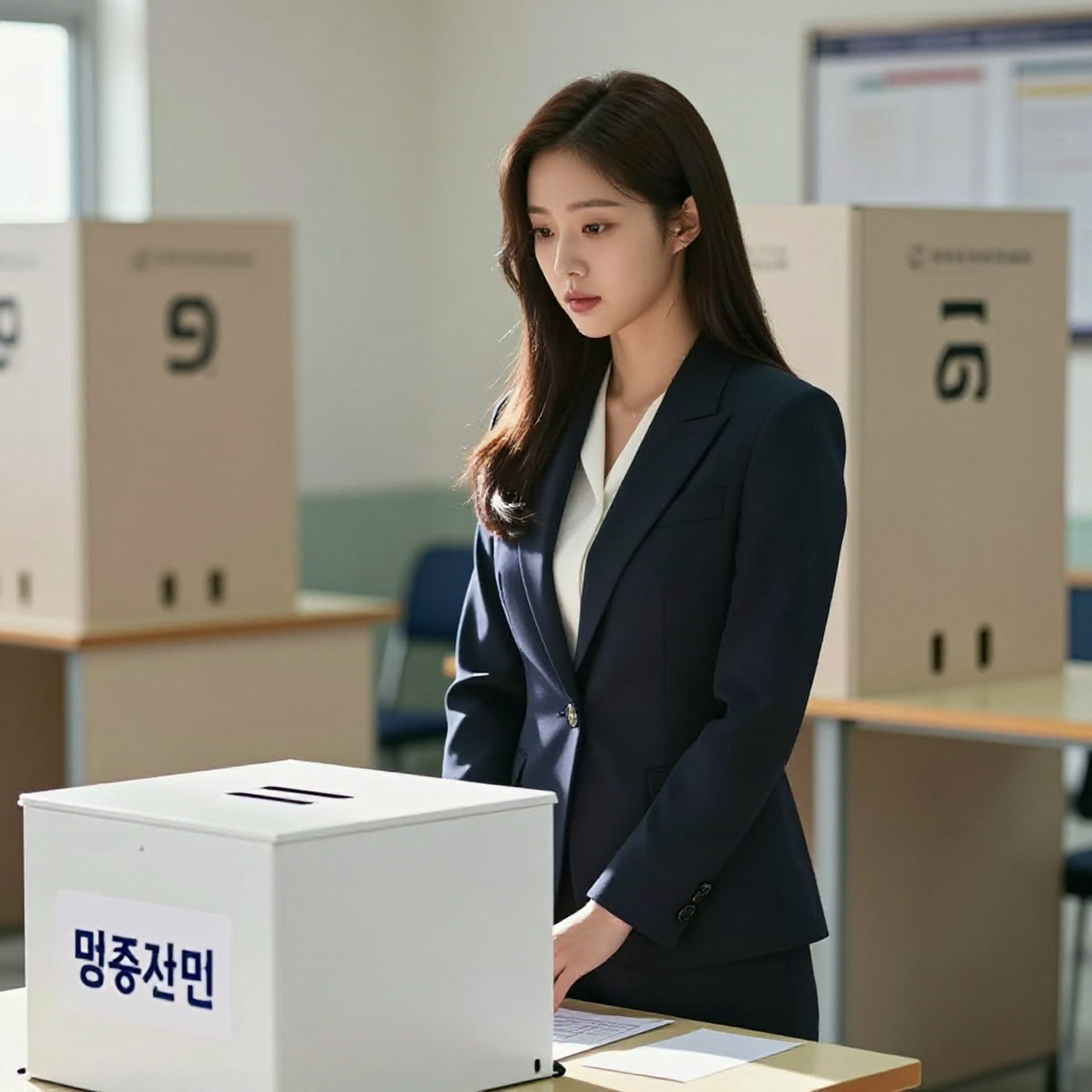 This Seoul mayoral race in the June 3 local elections is a contest where “Oh Se-hoon, chasing a fifth term” and “Jung Won-oh, the fresh face” square off within the margin of error — truly a race where a single vote could tip the result. Here’s the gist once more:
- The race shifted dramatically from a clear lead to a dead heat
- The pledges contrast as “transit and daily life” vs. “housing and supply”
- The battleground is the generational divide, plus moderate and third-party voter sentiment The most important thing is to weigh the pledges and the person that fit your own life for yourself, without being swayed by the numbers. Check each candidate’s pledges on the National Election Commission’s “Policy & Pledge Plaza,” and verify the polls directly with the National Election Survey Deliberation Commission. And above all, don’t forget to vote on June 3. If this post helped you make up your mind, please share it with those around you!
출처
https://www.ajunews.com/view/20260522165714432 https://biz.heraldcorp.com/article/10743351 https://www.fnnews.com/news/202605230609194454 https://www.sisajournal.com/news/articleView.html?idxno=373852 https://www.etoday.co.kr/news/view/2585930
댓글